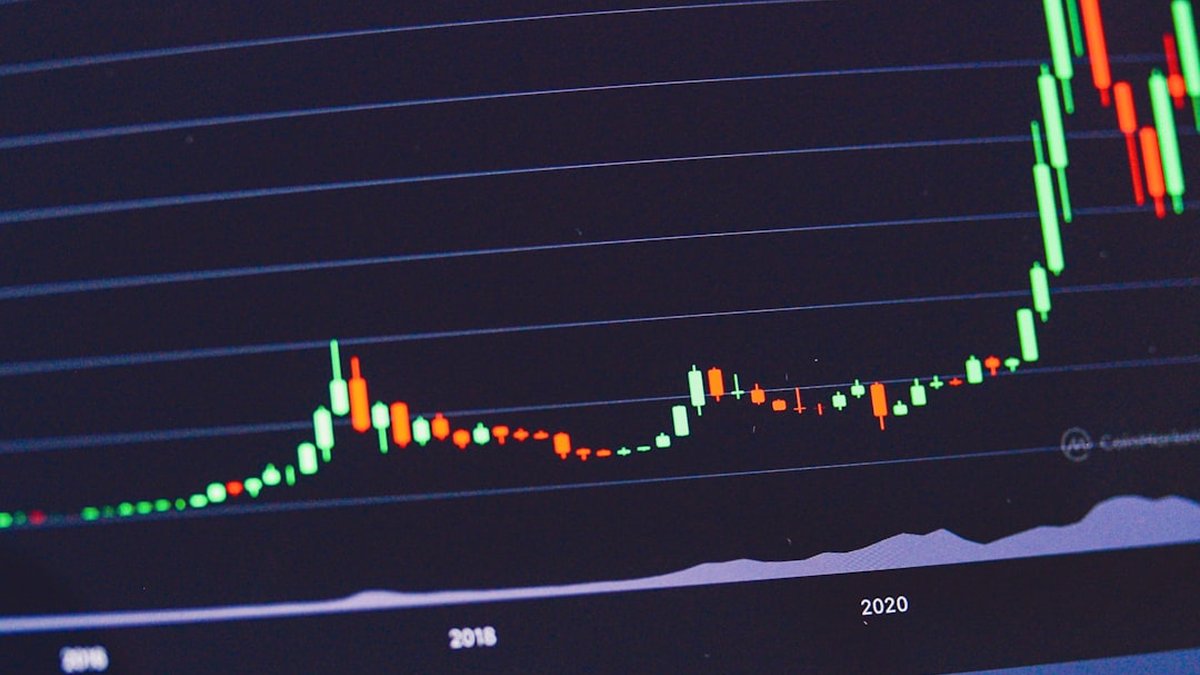
Why Early Altcoin Discovery Matters
The cryptocurrency market moves at lightning speed. By the time an altcoin hits mainstream crypto news outlets or trends on social media, much of its explosive growth has already occurred. The investors who capture the most significant gains are those who discover promising projects during their earliest stages, before the crowd arrives.
This isn't about gambling on random tokens or chasing the next meme coin pump. Successful early-stage altcoin investing requires a disciplined, systematic approach to research. The goal is to identify projects with genuine utility, strong teams, and sustainable tokenomics before broader market recognition drives prices higher.
According to CoinGecko, there are over 15,000 cryptocurrencies listed across various exchanges. The vast majority will fail or fade into obscurity. However, within that massive universe exists a small percentage of projects that will deliver transformative returns to early believers. Your job as a researcher is to develop the skills and processes to separate signal from noise.
Building Your Research Framework
Before diving into individual projects, you need a repeatable framework that guides your evaluation process. This framework should cover multiple dimensions of analysis and help you maintain objectivity when emotions inevitably enter the picture.
The most effective altcoin research methods combine quantitative metrics with qualitative assessment. Numbers tell part of the story, but understanding the narrative, the team's vision, and the community's strength requires deeper investigation. Think of your framework as a filter system that progressively narrows thousands of potential investments down to a handful worthy of your capital.
Start by defining your investment thesis. Are you looking for infrastructure plays that power the broader ecosystem? DeFi protocols disrupting traditional finance? Gaming tokens riding the blockchain gaming wave? Having clarity on what you're looking for helps you filter out projects that don't match your criteria, no matter how promising they might appear on the surface.
Evaluating Project Fundamentals
The foundation of any promising altcoin is its underlying project fundamentals. This goes far beyond reading the project's marketing materials. You need to understand what problem the project solves, whether blockchain technology is genuinely necessary for the solution, and how the project differentiates itself from competitors.
Begin with the whitepaper. A legitimate project should have detailed technical documentation explaining its architecture, consensus mechanism if applicable, and implementation roadmap. Red flags include vague technical explanations, unrealistic promises, and whitepapers that read more like marketing brochures than technical documents. Compare the whitepaper to actual development progress by checking the project's GitHub repository for commit frequency and code quality.
Examine the project's use case critically. Ask yourself: does this actually need to be on a blockchain? Many projects force blockchain technology into problems that could be solved more efficiently with traditional databases. The most promising altcoins address genuine pain points where decentralization, immutability, or trustlessness provides meaningful advantages.
Look at existing traction and partnerships. Has the project launched a working product, or is everything still in development? Real partnerships with established companies carry more weight than vague memorandums of understanding. Verify partnership claims directly rather than trusting announcements, as fake partnership news is a common manipulation tactic.
Assessing Team Credibility
Behind every successful cryptocurrency project is a capable, committed team. Evaluating team credibility is one of the most important altcoin research methods because execution ultimately determines whether a promising idea becomes a successful project.
Start by identifying the core team members. Are they public with verifiable identities, or anonymous? While some legitimate projects have anonymous founders, transparency generally reduces risk. Search for team members on LinkedIn to verify their professional backgrounds and past experience. Look for relevant expertise in blockchain development, the project's specific industry, and startup execution.
Evaluate the team's communication style and accessibility. Do founders engage with the community directly? Are they transparent about challenges and setbacks, or do they only share positive news? Teams that acknowledge difficulties and explain how they're addressing problems demonstrate maturity and build trust.
Advisors can add credibility, but verify their actual involvement. Some projects list prominent crypto figures as advisors who have minimal engagement with the project. Check whether advisors actively promote and support the project or simply lent their names for marketing purposes.
-
Confirm team members exist and have verifiable professional histories
-
Look for evidence of successful execution in previous ventures
-
Ensure the team has relevant blockchain development expertise
-
Check for transparent, consistent community engagement
-
Confirm advisors are actively engaged, not just names on a website
Analyzing Tokenomics
Tokenomics, the economic design of a cryptocurrency, fundamentally impacts long-term price potential. Even projects with excellent fundamentals and strong teams can fail as investments if their token economics create persistent selling pressure or misaligned incentives.
Start with supply dynamics. What is the total supply, and how is it distributed? Projects where insiders control large percentages of tokens create significant dump risk. Check vesting schedules on platforms like Token Unlocks to understand when large token releases might create selling pressure. A project approaching a major unlock event may face downward price pressure regardless of fundamental progress.
- Circulating Supply
- Tokens currently available in the market for trading.
- Fully Diluted Valuation (FDV)
- Market cap if all tokens were in circulation.
- Vesting Schedule
- Timeline for locked tokens to become tradeable.
- Token Utility
- The actual use case for the token within the ecosystem.
Examine the token's utility within its ecosystem. Does holding the token provide genuine benefits like governance rights, staking rewards, or access to platform features? Tokens with weak utility often struggle to maintain value because there's no organic demand beyond speculation.
Compare circulating market cap to fully diluted valuation. A large gap indicates significant future dilution that must be absorbed by market demand. Also consider inflation rates for tokens with ongoing emissions. Staking rewards might look attractive, but they're meaningless if inflation outpaces yield.
Tracking On-Chain Metrics and Market Signals
On-chain data provides objective insights that complement your qualitative research. Unlike social media sentiment or marketing claims, blockchain data cannot be fabricated. Learning to interpret these metrics gives you an edge over investors who rely solely on surface-level analysis.
Monitor wallet distribution and whale activity using tools like Etherscan for Ethereum-based tokens or chain-specific explorers. A healthy project should show growing unique wallet addresses and decentralizing token distribution over time. Concentration among a few wallets increases manipulation risk and suggests limited organic adoption.
Track developer activity through GitHub commits, smart contract deployments, and protocol upgrades. Active development signals ongoing commitment, while stagnant repositories may indicate abandoned projects. Tools like DeFiLlama help you track total value locked in DeFi protocols, providing insight into actual usage rather than speculative trading volume.
Pay attention to exchange listings and liquidity depth. Tokens listed only on obscure decentralized exchanges carry higher risk and lower liquidity. As projects mature, listings on reputable centralized exchanges often coincide with price appreciation due to increased accessibility.
Evaluating Community Strength
Community strength often determines which projects survive bear markets and achieve lasting success. A dedicated community provides organic marketing, valuable feedback, and resilient holding during downturns. Assessing community quality requires looking beyond follower counts to understand engagement depth.
Join the project's Discord server and Telegram groups. Observe the quality of conversations. Are members discussing technical developments and use cases, or is every message about price predictions and moon calls? Healthy communities balance enthusiasm with substantive discussion. Look for members who understand and can explain the project's value proposition.
Beware of artificially inflated metrics. Fake followers, bot-driven engagement, and paid promotion are common in crypto. Genuine communities show organic growth patterns, diverse discussion topics, and members who defend the project with informed arguments rather than empty hype.
Evaluate how the team interacts with community feedback. Do they address concerns transparently? Are they receptive to constructive criticism? Projects that silence dissent or dismiss legitimate questions often have something to hide.
- Organic growth in social metrics over time
- Active discussion beyond price speculation
- Team members engaging directly with community
- Members who can articulate the project's value proposition
- Constructive criticism allowed and addressed
Identifying Early-Stage Breakout Signals
After completing fundamental research, look for catalysts that might trigger broader market recognition. Identifying these signals before they become obvious gives you positioning advantage.
Upcoming product launches, mainnet deployments, and major partnership announcements often precede price appreciation. Follow project roadmaps and development updates to anticipate these events. However, be cautious of "buy the rumor, sell the news" dynamics where prices rise in anticipation and fall after announcements.
Watch for accumulation patterns in on-chain data. When wallets with histories of successful early investments start accumulating a token, it may signal sophisticated money positioning ahead of retail awareness. Similarly, increasing institutional interest through fund holdings or exchange custody support can validate project quality.
Technical analysis can complement fundamental research for timing entries. Look for accumulation patterns, breakouts from consolidation ranges, and volume confirmation. While fundamentals determine what to buy, technical analysis can help determine when to buy for optimal positioning.
Putting Your Research Into Practice
Developing effective altcoin research methods is an ongoing process that improves with practice and experience. Start by applying this framework to projects you're already familiar with. This helps calibrate your evaluation criteria against known outcomes.
Document your research process and investment decisions. Keep notes on why you invested, what catalysts you anticipated, and what would cause you to exit. This creates accountability and enables you to refine your process based on results. Over time, you'll identify which factors most reliably predict success in your investment style.
Remember that early-stage investing requires patience. Projects you identify today may take months or years to achieve mainstream recognition. Avoid the temptation to abandon positions during inevitable drawdowns if your fundamental thesis remains intact. The biggest gains come to those who identify quality projects early and maintain conviction through volatility.
The altcoin market rewards diligent researchers who combine systematic analysis with patience and discipline. By developing your own rigorous research framework and consistently applying it, you position yourself to discover promising projects before the crowd arrives and capture the gains that come with early conviction.
Comments
No comments yet. Be the first to comment!
Leave a Comment